

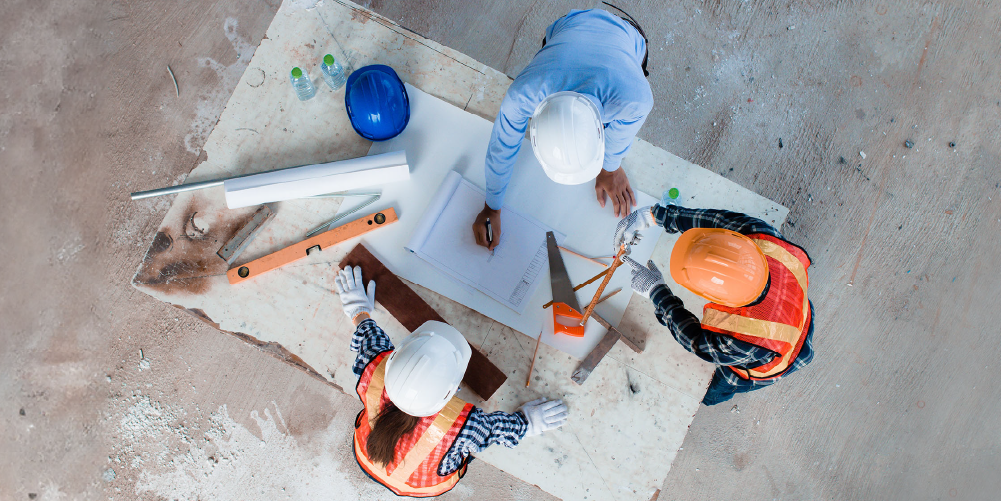
What Is Design-Build Construction?
Design-build is a project delivery method in which one company or project team manages both the design and construction portions of a project.
For a property improvement with an unfinished scope, our design-build services connect design and construction coordination in one delivery approach. Our pre-construction planning helps identify the decisions needed before pricing or construction commitments.
Under a traditional design-bid-build approach, the property owner hires an architect first and then obtains bids from contractors after the plans are completed.
With design-build construction, the contractor, architect, engineers, consultants, and owner collaborate earlier in the process.
This integrated approach can be especially helpful for commercial property managers who need preliminary budgets, fast decision-making, and one primary point of responsibility.
One Point of Contact
Commercial construction projects often involve numerous participants, including:
- Property managers
- Building owners
- Tenants
- Architects
- Engineers
- Contractors
- Subcontractors
- Inspectors
- Utility companies
- Equipment vendors
When design and construction are managed separately, information can be lost or delayed between the different parties.
A commercial design-build contractor helps coordinate these responsibilities through one central team.
This can reduce confusion and give the property manager a clearer understanding of who is responsible for each phase.
Earlier Cost Information
One advantage of design-build is the ability to discuss construction costs while the design is still being developed.
The contractor can review proposed layouts, materials, structural systems, and building components before the plans are finalized.
This allows the team to identify:
- High-cost design elements
- Long-lead materials
- Constructability concerns
- Existing building limitations
- More cost-effective alternatives
- Potential permitting issues
- Opportunities for value engineering
Early cost feedback helps reduce the risk of completing an entire design that exceeds the owner’s budget.
Improved Constructability
Architectural plans must communicate the design intent, but the contractor is responsible for physically building the project.
In a design-build arrangement, the construction team can provide input throughout design development.
This helps ensure that details are practical, coordinated, and compatible with existing conditions.
Constructability reviews may identify:
- Conflicts between architectural and engineering plans
- Inadequate installation access
- Structural coordination issues
- Mechanical routing problems
- Electrical capacity limitations
- Difficult material transitions
- Building access and logistics concerns
- Phasing challenges in occupied spaces
Resolving these issues during design is typically less disruptive than resolving them during construction.
Faster Project Delivery
Design-build can allow certain project activities to overlap.
For example, the team may begin:
- Existing-condition surveys
- Early demolition planning
- Material procurement
- Utility coordination
- Permit research
- Long-lead equipment selection
These activities can move forward while other portions of the design are still being completed.
The schedule still depends on permitting, owner decisions, material availability, and project complexity, but early collaboration can help reduce unnecessary gaps between project phases.
Better Support for Property Managers
Property managers frequently manage construction projects in addition to their regular responsibilities.
A design-build contractor can help reduce the administrative burden by coordinating:
- Design meetings
- Site investigations
- Preliminary budgets
- Consultant coordination
- Permit submissions
- Construction schedules
- Tenant notifications
- Subcontractors
- Inspections
- Project closeout
This consolidated approach can make complicated projects easier to manage.
Projects That May Benefit From Design-Build
Design-build can be used for many commercial project types, including:
- Tenant improvements
- Office renovations
- Industrial facility improvements
- Warehouse conversions
- Retail buildouts
- Medical office renovations
- Financial institution remodels
- Building additions
- Ground-up commercial construction
- Mechanical and electrical upgrades
- Accessibility improvements
- Exterior renovations
It is particularly useful when the owner wants early budget information or does not already have a complete design team.
Selecting a Commercial Design-Build Contractor
The right design-build contractor should have experience coordinating both design professionals and construction trades.
Property managers should look for:
- Commercial project experience
- Reliable preconstruction budgeting
- Strong communication
- Design and engineering relationships
- Permitting knowledge
- Value-engineering capabilities
- Detailed project schedules
- Experience working in occupied buildings
- Organized project documentation
- Post-construction support
Brady Construction Group provides design-build, preconstruction, tenant improvement, renovation, and commercial construction services throughout Southern California.
Our team helps property managers and building owners move projects from early concepts through permitting and construction.
Considering a commercial renovation or construction project? Contact Brady Construction Group to discuss whether design-build is the right delivery method for your property.
Move from a brief to a coordinated scope
| Stage | Owner input | Team output to confirm |
|---|---|---|
| Define the need | Current use, desired changes, target budget, and operating restrictions. | Written scope priorities and items that require investigation. |
| Test the concept | Decisions about layout, equipment, finishes, and phasing. | Design coordination, initial pricing basis, and assumptions. |
| Authorize the next step | Approved selections, responsibilities, and commercial terms. | Agreed design deliverables, procurement steps, and construction scope. |
A coordinated team can identify conflicts earlier, but design-build does not remove the need for owner decisions, design review, permits, or clear contract terms. Compare the alternatives in our design-build versus design-bid-build guide.
Ready to plan the work? Discuss your construction project. Share the property address, intended use, available drawings, target timing, and the work you want included.